


Osteoporosis or bone loss is a bone disease that weakens the bones so that they can break in the stresses of everyday life. Such fractures occur preferentially on the spinal column and primarily damage the load-bearing vertebral bodies.
Osteoporosis is the most common bone disease in old age. The most common is primary osteoporosis, that is, osteoporosis, which, unlike secondary osteoporosis, does not occur as a result of another disease. 80% of all osteoporosis affects postmenopausal women. 30% of all women develop clinically relevant osteoporosis after menopause. Secondary osteoporosis is rarer (5%), with diseases that require treatment with glucocorticosteroids for a longer period of time and / or lead to immobilization to the fore.
Common consequences of osteoporosis are broken bones. Sorted by frequency these are:
- Vertebral burglary (sintering)
- Hip-joint-near fractures of thighbone (including femoral neck fracture)
- wrist-near spoke fractures (distal radius fracture)
- humeral head fracture (subcapital humeral fracture)
- pelvic fracture
In addition, there is an increased susceptibility to fractures elsewhere in the skeleton.
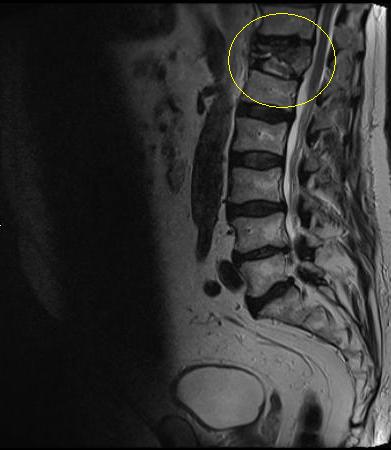 The previous treatment of the complaints caused by osteoporosis was essentially limited to physiotherapeutic measures, e.g. strengthen the back muscles, but do not undo the bony changes that occur in the spine. With certain medications (such as calcium, vitamin D and the so-called bisphosphonates) it is possible to rebuild bones in the medium and long term. Although this therapy prevents further bone loss, but can not undo fractures occurred.Ist it comes to a, the stability of the spine endangering fracture of single or multiple vertebral bodies, the classical therapy is either a corset treatment or the support of the spine by surgery.
The picture above shows a sagittal MRI image of the lumbar spine, a compression fracture in the 12th thoracic vertebra.
The new procedure, the cement stabilization (vertebroplasty / kyphoplasty) that may be applied to you, is an alternative to the classic treatment mentioned above.